
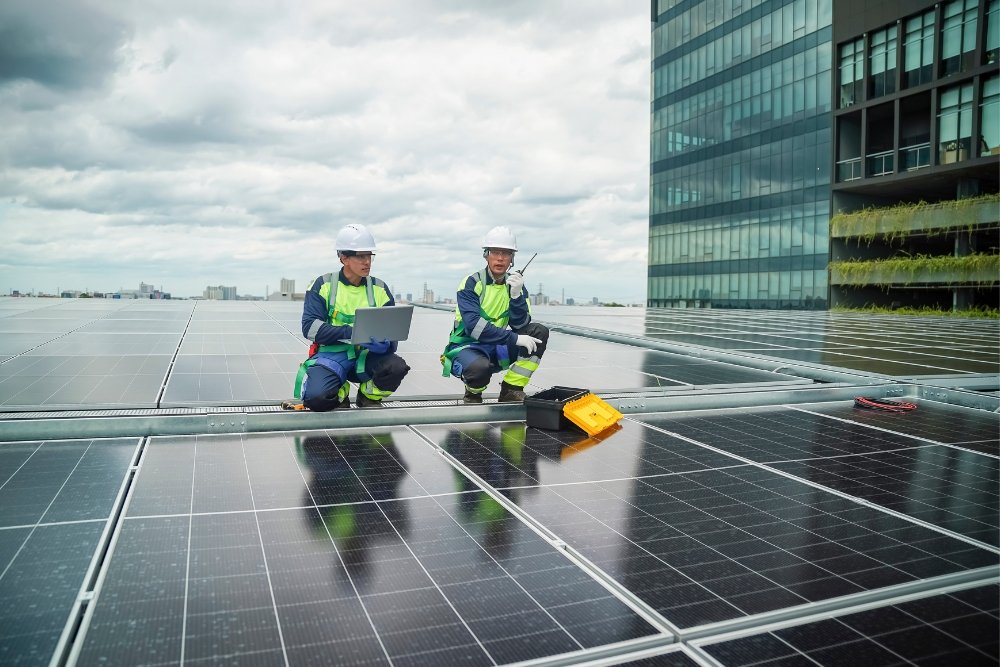
Maintaining a solar plant is more than just panel cleaning or system checks—it’s about ensuring maximum efficiency, safety, and longevity. At The Doctor Solar, technicians play a crucial role in keeping solar plants operating at their peak.
This article provides a glimpse into the daily life of a Doctor Solar technician, highlighting the tools they use, safety protocols they follow, and diagnostic procedures they perform during on-site solar maintenance.
1. Morning Preparation: Planning and Route Check
Before heading to the site, a Doctor Solar technician starts with:
- Reviewing service requests: Checking which solar plants require maintenance, cleaning, or diagnostics.
- Route planning: Ensuring timely arrival and minimizing travel delays.
- Equipment checklist: Verifying tools, safety gear, and monitoring devices.
This preparation ensures a smooth and efficient maintenance workflow, reducing downtime for the solar plant.
2. Essential Tools Every Solar Technician Uses
A Doctor Solar technician relies on specialized tools to perform solar maintenance and diagnostics safely and efficiently:
- Multimeter & Clamp Meters: To measure voltage, current, and detect electrical anomalies.
- IV Curve Tracer: Checks the performance and health of solar panels.
- Thermal Cameras: Detect overheating cells or faulty connections.
- Solar Panel Cleaning Tools: Eco-friendly brushes, water-fed poles, and chemical-free cleaning solutions.
- Safety Equipment: Gloves, helmets, insulated tools, harnesses, and fire-resistant clothing.
Having the right tools ensures accurate diagnostics, faster maintenance, and higher power generation efficiency.
3. On-Site Safety Protocols
Safety is a top priority during any solar maintenance visit. Key protocols include:
- Personal Protective Equipment (PPE): Wearing gloves, helmets, and insulated clothing.
- Electrical Isolation: Switching off inverters before performing repairs or inspections.
- Fall Protection: Using harnesses for rooftop work.
- Environmental Safety: Ensuring tools and water do not damage panels or surroundings.
- Communication: Coordinating with clients and team members to prevent accidents.
Following strict safety protocols protects both the technician and the solar system.
4. On-Site Diagnostics and Maintenance
Once safety is ensured, the technician begins the diagnostic process:
a) Visual Inspection
- Checking for cracks, debris, dirt, or shading issues on panels.
- Inspecting mounting structures, cables, and inverters.
b) Performance Testing
- Measuring voltage, current, and power output.
- Comparing data with expected performance to identify underperforming panels.
c) Cleaning and Minor Repairs
- Performing solar panel cleaning using eco-friendly methods.
- Tightening loose connections, replacing damaged components, and calibrating equipment.
d) Reporting and Recommendations
- Creating detailed reports for the client.
- Suggesting system upgrades, preventive maintenance, or further inspections if needed.
This comprehensive approach ensures the solar plant operates at maximum efficiency and power generation is optimized.
5. Post-Service: Data Logging and Client Communication
After completing on-site tasks, the technician:
- Logs system performance data in the Doctor Solar App.
- Schedules any follow-up or preventive maintenance.
- Provides clients with a summary of work done, alerts, and recommendations.
Effective communication ensures transparency and builds trust between technicians and clients.
6. Challenges and Rewards
Being a Doctor Solar technician comes with unique challenges:
- Working in extreme weather conditions.
- Handling high-voltage systems safely.
- Diagnosing complex issues under time constraints.
Despite challenges, technicians enjoy:
- Professional growth: Learning advanced solar maintenance techniques.
- Contribution to sustainable energy: Ensuring reliable, clean power generation.
- Skill development: Using modern tools and technologies for diagnostics.
Conclusion
A Doctor Solar technician is not just a maintenance worker—they are solar system caretakers. From on-site diagnostics, cleaning, and repairs to following strict safety protocols, these professionals ensure your solar plant delivers optimal power generation, efficiency, and longevity.
By understanding the daily responsibilities and procedures of a solar technician, clients can appreciate the expertise, precision, and care that go into every solar maintenance visit.