
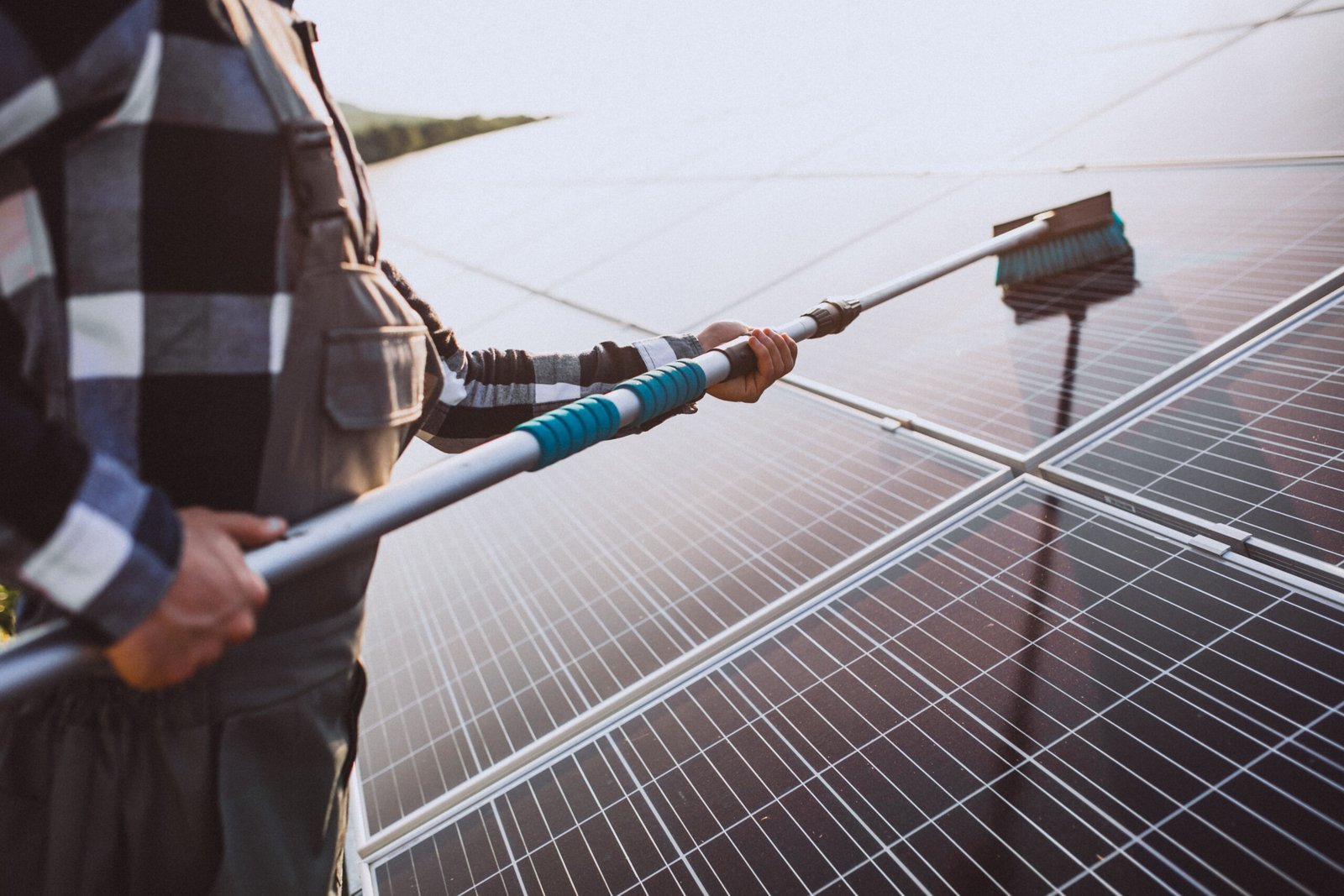
Solar panels are designed to absorb sunlight efficiently—but even a thin layer of dust, dirt, or residue can significantly reduce their ability to generate power. While many system owners rely on basic methods like water and cloth, these approaches often fail to deliver proper solar panel cleaning and may even cause damage.
To maintain optimal solar power generation, professional cleaning techniques go far beyond simple wiping. They are designed to protect panel surfaces, improve light absorption, and support long-term solar maintenance.
In this article, we explore why traditional cleaning methods fall short and how advanced professional solar cleaning techniques ensure maximum efficiency and system longevity.
Why Basic Cleaning Methods Are Not Enough
Many people assume that using water and a cloth is sufficient for solar panel cleaning. However, this approach has several limitations:
1. Incomplete Dirt Removal
- Cloth wiping often spreads dirt instead of removing it
- Hard water leaves mineral deposits
- Sticky residues like bird droppings remain
2. Risk of Surface Damage
- Rough cloth or improper pressure can scratch panels
- Dry wiping may damage anti-reflective coatings
3. Uneven Cleaning
- Inconsistent cleaning leaves patches
- Leads to uneven light absorption and hot spots
These issues reduce solar panel efficiency and may impact long-term performance.
Understanding Light Absorption and Its Importance
Solar panels convert sunlight into electricity using photovoltaic cells. For maximum output:
- Sunlight must reach the cells without obstruction
- The panel surface must remain clear and smooth
- Anti-reflective coatings must remain intact
Even minor contamination can:
- Reflect sunlight away
- Block energy absorption
- Reduce solar power generation
This is why proper solar maintenance and cleaning techniques are essential.
Professional Solar Panel Cleaning Techniques Explained
Professional solar cleaning services use specialized techniques designed for efficiency and safety.
1. Soft Wash Cleaning Method
The most recommended technique in the industry.
How It Works
- Low-pressure water application
- Gentle cleaning tools
- Even distribution across panels
Benefits
- Prevents structural stress
- Protects coatings
- Ensures thorough cleaning
This method is far safer than high-pressure cleaning systems.
2. Deionized (DI) Water Cleaning
What Is DI Water?
Deionized water is purified to remove minerals and salts.
Why It Matters
- Leaves no residue or streaks
- Prevents hard water stains
- Enhances light transmission
This improves overall solar panel efficiency and long-term cleanliness.
3. Specialized Solar Cleaning Solutions
Professional cleaning agents are:
- Eco-friendly
- Chemical-free or mild
- Designed for solar panel surfaces
They help remove:
- Oil deposits
- Bird droppings
- Industrial pollutants
Without damaging the anti-reflective coating.
4. Anti-Abrasive Cleaning Tools
Professionals use:
- Soft brushes
- Microfiber applicators
- Telescopic cleaning systems
These tools:
- Prevent scratches
- Ensure uniform cleaning
- Reach difficult areas safely
5. Robotic & Automated Cleaning Systems (Advanced)
For large-scale plants:
- Robotic cleaners perform regular cleaning
- Automated systems reduce manual intervention
- Consistent cleaning schedules improve performance
These technologies are ideal for commercial solar installations.
Impact of Professional Cleaning on Solar Power Generation
Data from field applications shows:
- 5–10% efficiency improvement in moderately dirty panels
- Up to 20–25% improvement in heavily soiled panels
- Faster ROI due to increased energy output
Professional solar panel cleaning directly impacts solar power generation.
Frequency of Professional Solar Cleaning
Cleaning frequency depends on:
- Location (urban, industrial, rural)
- Dust levels
- Bird activity
- Seasonal changes
Recommended Schedule:
- Every 3–6 months in dusty regions
- Every 6–12 months in cleaner environments
Regular cleaning ensures consistent performance and effective solar maintenance.
Common Mistakes to Avoid
- Using pressure washers
- Cleaning during peak sunlight (thermal stress risk)
- Using harsh chemicals or detergents
- Ignoring safety precautions
These mistakes can cause long-term damage and reduce solar panel efficiency.
DIY vs Professional Solar Cleaning
DIY Cleaning
- Low initial cost
- Limited effectiveness
- Risk of damage
- No performance analysis
Professional Solar Cleaning
- Safe and efficient methods
- Advanced tools and techniques
- Integrated inspection and maintenance
- Improved solar power generation
Professional services provide better long-term value.
Role of Cleaning in Solar Maintenance Strategy
Cleaning is a critical part of solar maintenance, but it should be combined with:
- System inspections
- Performance monitoring
- Preventive maintenance
- Fault detection
A comprehensive approach ensures maximum system efficiency and longevity.
Environmental Benefits of Proper Cleaning
Professional cleaning:
- Uses eco-friendly methods
- Reduces water wastage with controlled systems
- Supports sustainable energy generation
Maintaining clean panels ensures optimal use of renewable energy resources.
Long-Term Benefits of Professional Solar Cleaning Techniques
- Improved solar panel efficiency
- Consistent solar power generation
- Extended panel lifespan
- Reduced maintenance costs
- Better return on investment
Clean panels are high-performing panels.
Final Thoughts: Cleaning Is More Than Just Maintenance—It’s Performance Optimization
Solar panel cleaning is not just about removing dirt—it’s about maximizing performance. Basic methods like water and cloth may seem convenient but often fail to deliver the results needed for optimal efficiency.
Professional solar cleaning techniques ensure:
- Safe and thorough cleaning
- Protection of panel surfaces
- Improved light absorption
- Enhanced solar power generation
Investing in proper cleaning methods is essential for long-term solar maintenance and system success.
Because when it comes to solar energy, even a small layer of dust can stand between you and maximum power output.